
What Aurono actually
does with your rules.
We gave Aurono three different sets of rules and ran them against years of real Bitcoin price data. Here’s what happened, including the moments Aurono chose not to act.
These are simulations based on historical data, not investment advice.
Try it without risking money
The Lab lets you test your rules against real price history before you invest a single euro. Pick a coin, set your rules, and see what would have happened over the past months or years.
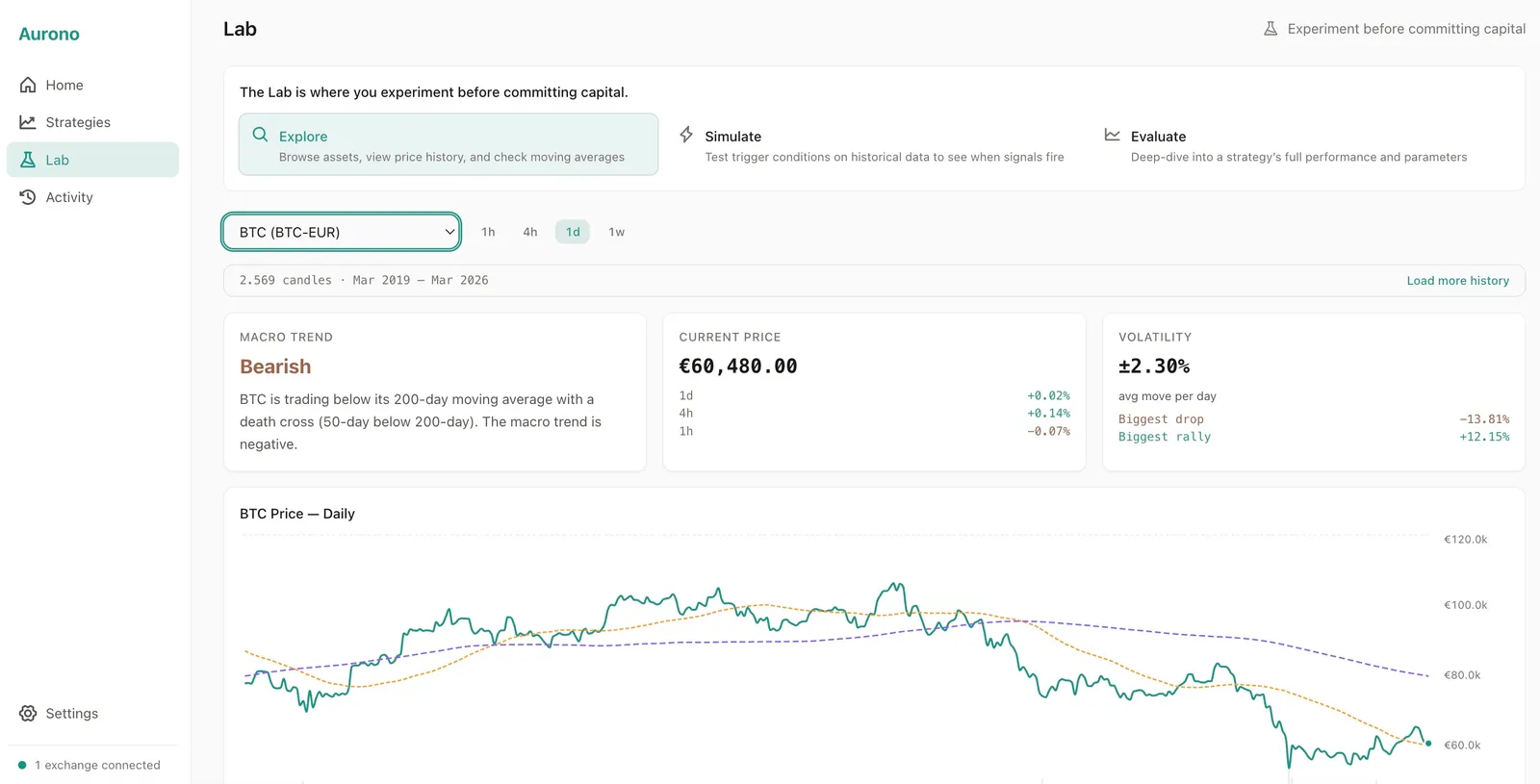
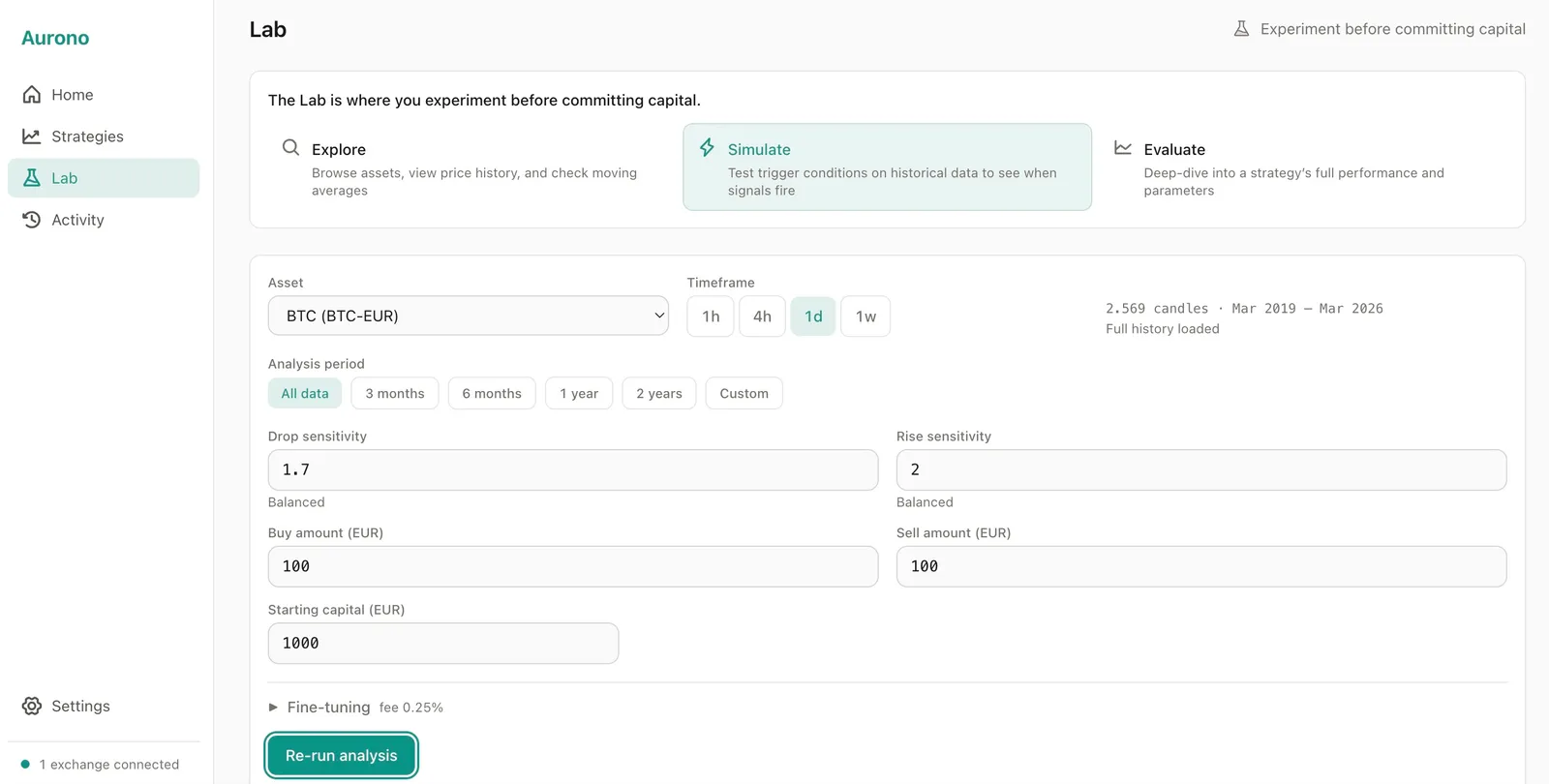
Pick a coin, set your rules, and hit “Re-run analysis.” No money at risk, just data.
Buy the weekly dip, sell the recovery
This set of rules checks Bitcoin once a week. If the price dropped more than 15% that week, Aurono buys. If it rose more than 17%, Aurono sells. The rest of the time, it simply waits.
Over 7 years, these rules resulted in just 19 trades: buying during crashes and selling during recoveries. Patient, low-activity, and steady.
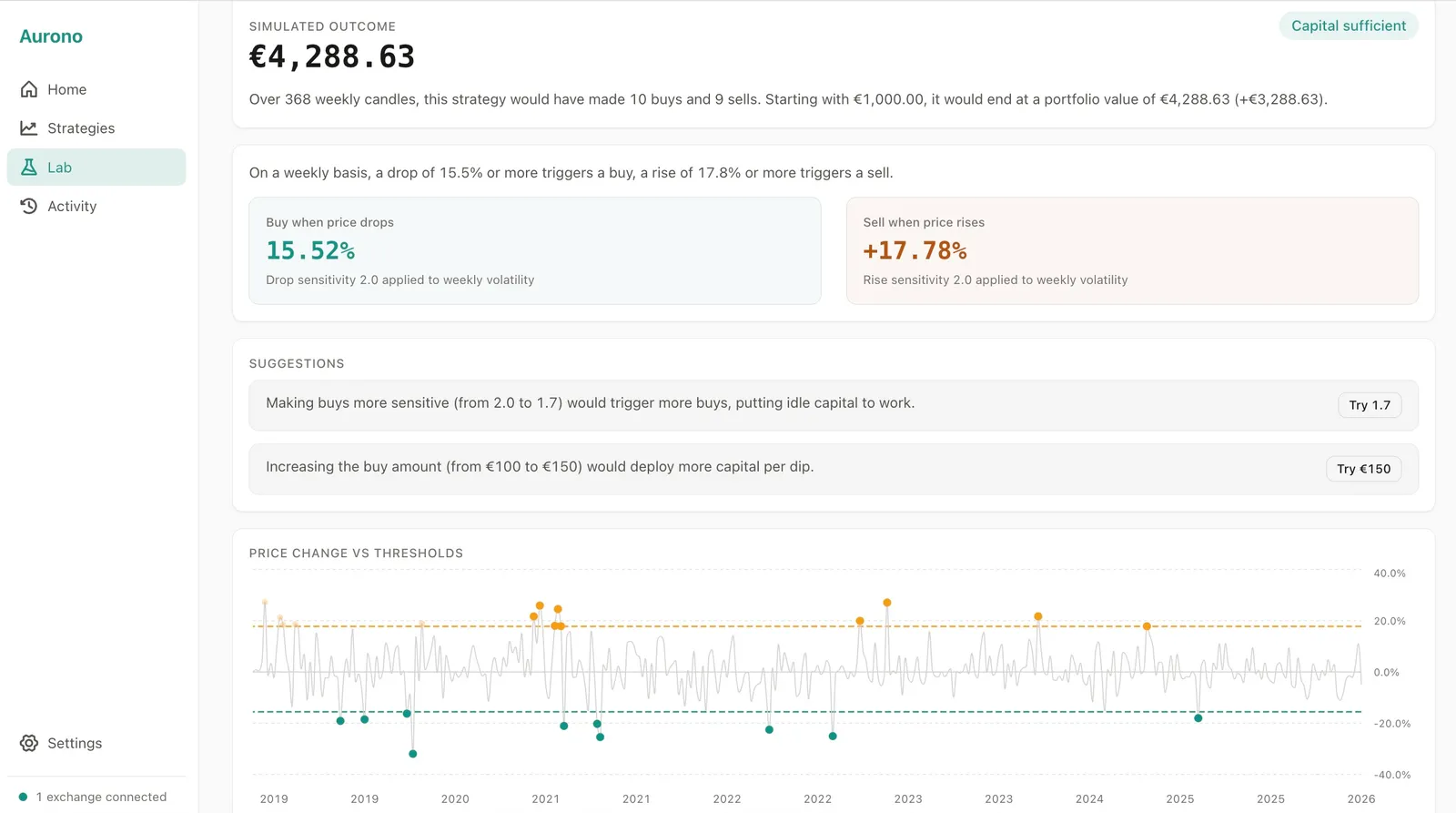
Not every price move leads to a trade. When the money is already invested, or when selling would mean a loss, Aurono holds back automatically. That’s the built-in safety system doing its job.
React to daily price swings
Let’s walk through a complete test from start to finish. These rules check the Bitcoin price every day and react to swings of about 5% in either direction.
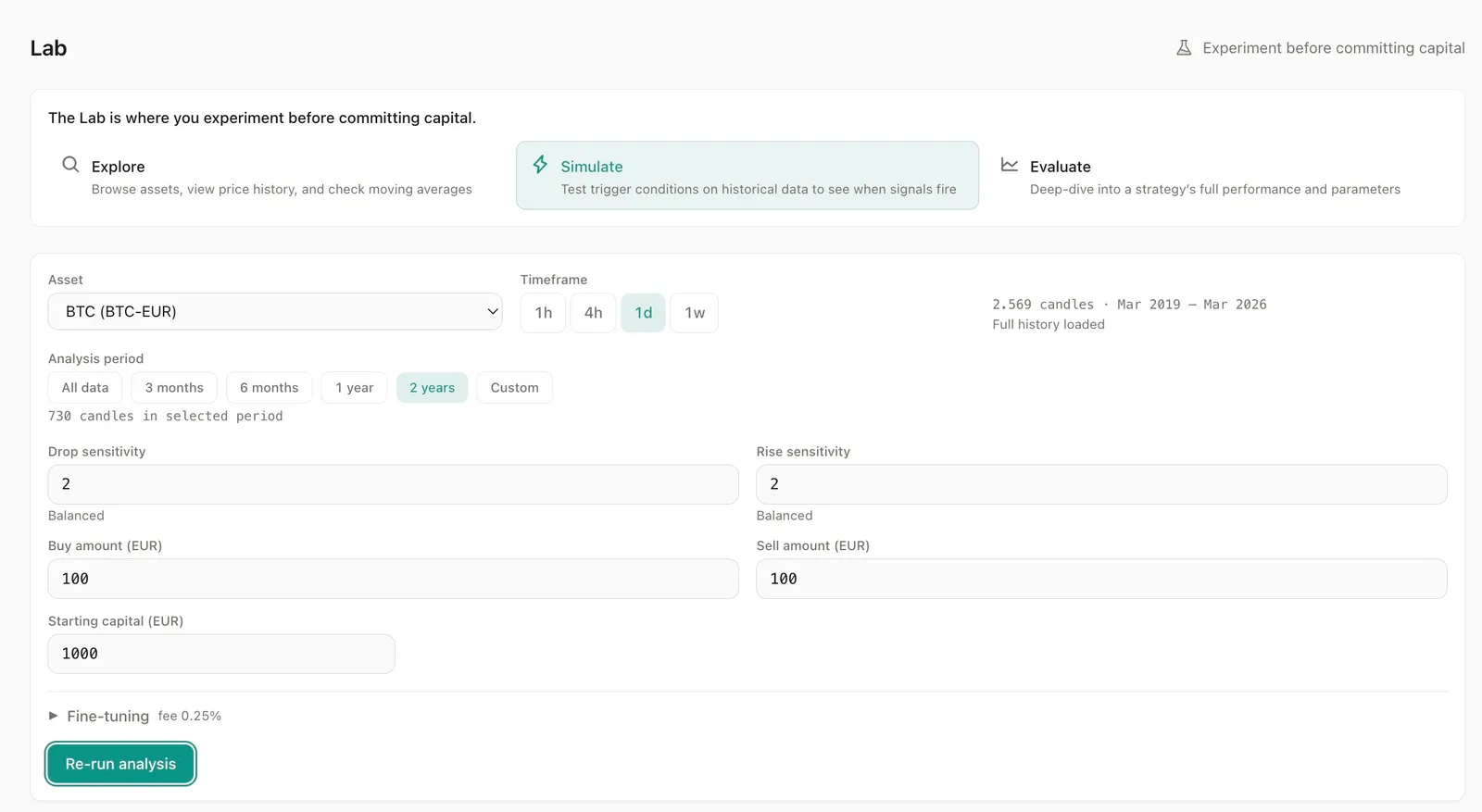
1. Set your rules
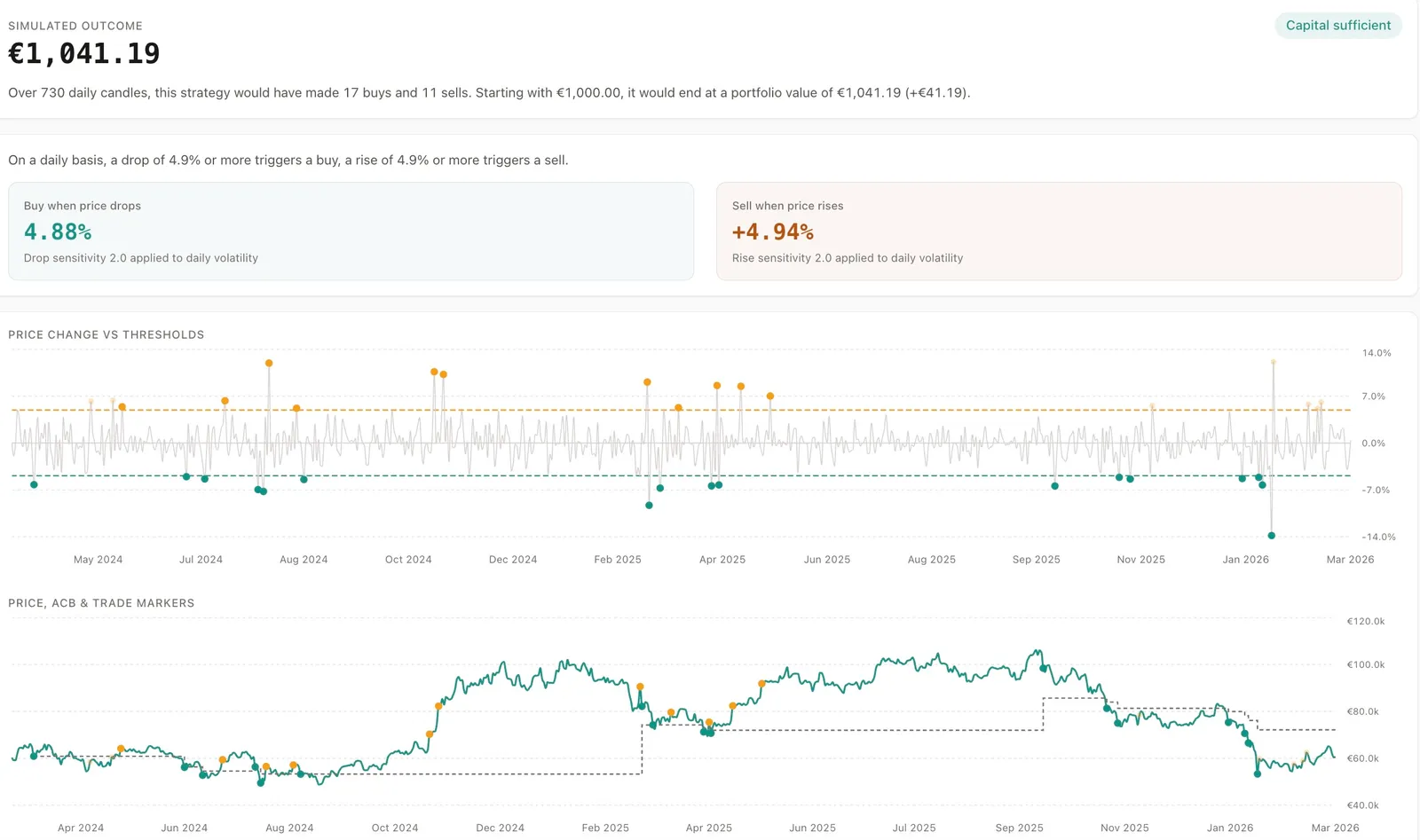
Bitcoin, checked daily, over a 2-year period. Buy when the price drops about 5%, sell when it rises about 5%. €100 per trade, €1,000 to start with.
2. See what would have happened
Over 730 days, Aurono would have bought 17 times and sold 11 times. Each buy happened when the price dropped enough to trigger the rule.
The price change vs thresholds chart shows when signals fired. Below it, the price chart plots every executed trade (solid) and every ignored signal (opaque), along with the running average cost basis.
3. Compare against alternatives
The Lab doesn’t just show the result, it puts it in context. How did these rules perform compared to buying a fixed amount every month (DCA), or buying once and just holding?
The portfolio value chart shows all three approaches side by side over time. The signal breakdown tells you exactly how many trades were executed, how many were blocked, and why.
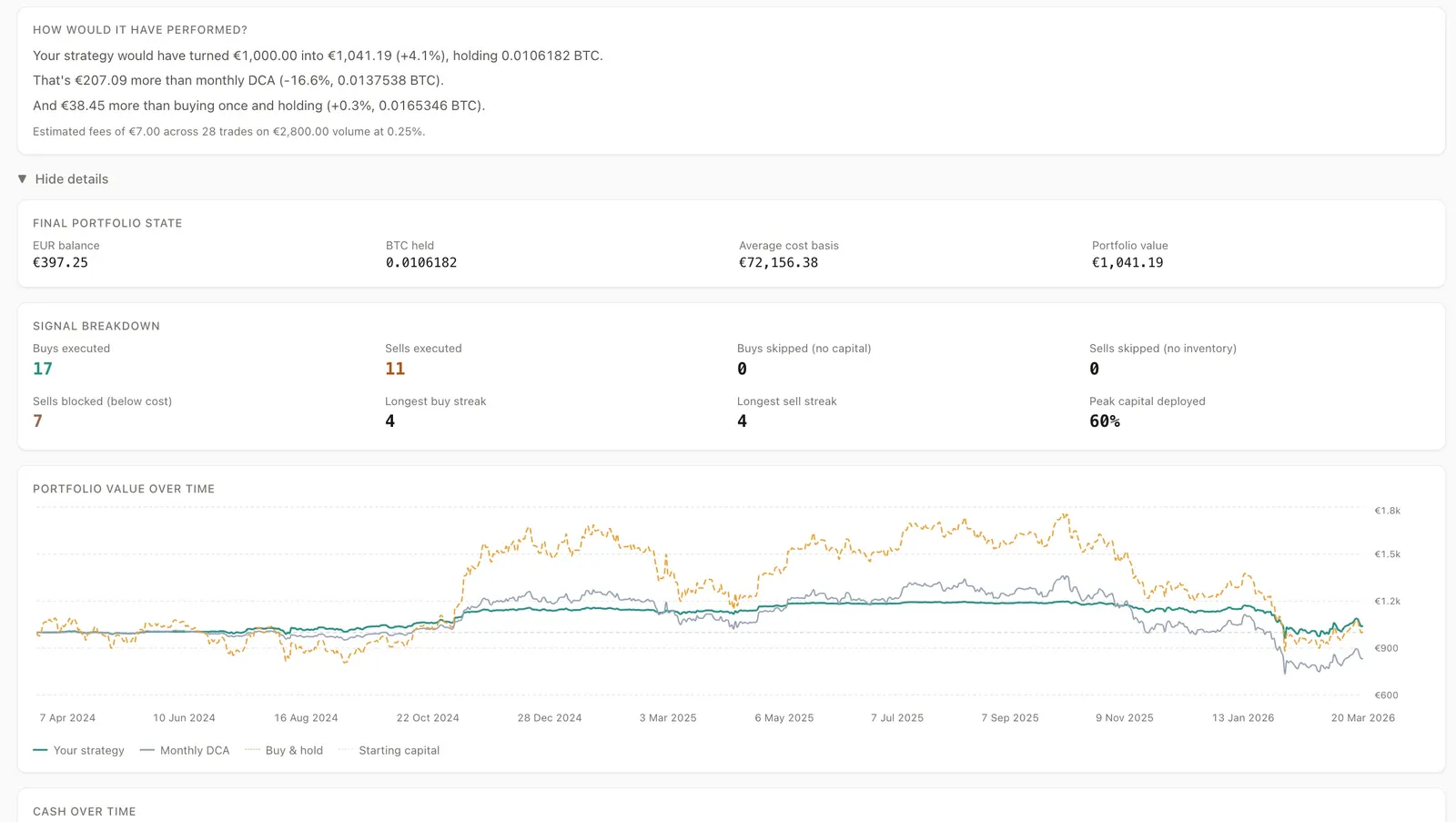
This is what transparency looks like. Every decision explained. Every trade accounted for.
How is this different from buying monthly?
You buy the same amount every month, no matter what the price is doing. Simple and predictable, but you end up buying at the top just as often as the bottom.
Aurono only acts when your conditions are met: it buys when prices actually drop and sells when they actually rise. You’re still following a plan, but one that responds to what the market is doing.
You don’t have to choose. You can keep your monthly auto-buy on your exchange and run Aurono alongside it.
Every result on this page is reproducible. Aurono’s engine runs the same rules on the same price data and produces the same output, every time. The event log records every decision, including the ones where Aurono chose not to act, protected by the runtime guards. See the Trust page for the architecture, and Understanding your average cost basis for how the most important guard actually works.
Want to set your own rules?
Try Aurono free in shadow mode, then buy a €99 license when you’re ready to go live.